Elevating Brand Identity with Quinley: The Intersection of Handcrafted Grace and Modern Design
In an era where digital interfaces are increasingly dominated by rigid geometric structures and standardized sans-serif typography, a subtle shift is occurring in the creative landscape. Professionals, entrepreneurs, and designers are seeking ways to inject humanity, warmth, and distinct personality into their work without sacrificing readability or professional polish. This search for authenticity has brought Quinley to the forefront of contemporary design discussions. It is not merely a typeface; it is a statement about the evolving relationship between technology and human expression.
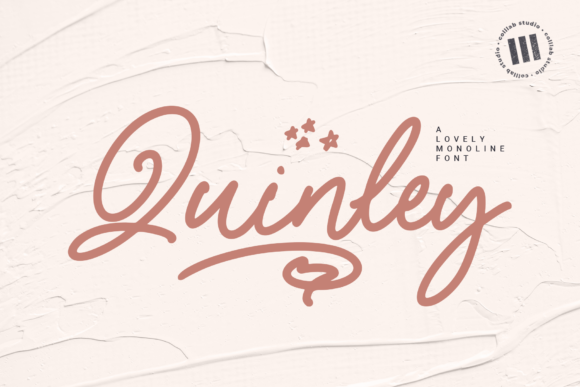
Quinley is a delicate, elegant, and flowing handwritten font that captures the fluidity of ink on paper while maintaining the precision required for digital screens. With its beautiful and well-balanced characters, it matches a wide pool of designs, bridging the gap between formal business communication and personal storytelling. As we navigate a market saturated with generic assets, understanding the unique value proposition of Quinley becomes essential for anyone looking to differentiate their brand voice.
The Renaissance of Handwritten Typography
To understand why Quinley is gaining traction, one must first look at the broader context of consumer behavior and digital trends. For the past decade, the tech industry has leaned heavily on minimalism and uniformity. However, as users become desensitized to algorithmic perfection, there is a growing craving for imperfection that feels real. Consumers today value transparency and connection over sterile efficiency.
This psychological shift has created a fertile ground for script and handwritten fonts. People want to feel that a human being designed their experience. When a user encounters a logo or a headline set in a font like Quinley, they perceive a level of care and craftsmanship that standard system fonts cannot convey. It signals that the creator took time to consider the aesthetic nuance, fostering a deeper emotional connection with the audience.
For freelancers and small business owners, this distinction is often the difference between being seen as a commodity or a premium service. By integrating a font that possesses such character, professionals can elevate their visual identity from "functional" to "memorable." The delicate strokes of Quinley do not shout for attention; instead, they invite the viewer in, creating an atmosphere of sophistication and approachability simultaneously.
Design Versatility Across Industries
One of the most compelling aspects of Quinley is its adaptability. In the past, handwritten fonts were often relegated to specific niches, such as wedding invitations or boutique bakery menus. While these applications remain valid, the modern design ecosystem demands versatility. Quinley has proven itself to be a chameleon, fitting seamlessly into diverse sectors ranging from high-end fashion and lifestyle blogging to corporate branding and tech startups.
- Luxury and Fashion: The flowing nature of the letterforms complements the aspirational quality of luxury brands, adding a touch of exclusivity and artistry.
- Tech and Innovation: When used sparingly for accents or logos, Quinley softens the hard edges of technology companies, making them appear more user-centric and empathetic.
- Creative Agencies: For agencies pitching to clients, using Quinley demonstrates an appreciation for detail and a willingness to break away from the status quo.
The font's ability to match a wide pool of designs stems from its structural integrity. Unlike many script fonts that struggle with legibility at smaller sizes or in complex layouts, Quinley maintains clarity. Its well-balanced characters ensure that the message remains clear even when the style is expressive. This balance is crucial for marketers who need to maintain brand consistency across various media, from mobile notifications to large-scale billboards.
Technical Excellence Meets Creative Freedom
Beyond the aesthetic appeal, the technical architecture of Quinley supports the practical needs of modern workflows. In the world of professional design, efficiency is paramount. Designers often face tight deadlines and the pressure to iterate quickly. A font that complicates this process is a liability. This is where the PUA encoding of Quinley becomes a significant asset.
Quinley is PUA encoded, which means you can access all of the glyphs and swashes with ease. Public Use Area (PUA) encoding allows designers to map alternate characters, ligatures, and decorative swashes to specific keys on their keyboard. This functionality transforms the typing experience. Instead of manually searching through a library of hundreds of glyph variations, a designer can simply type a key combination to insert a flourish or a connecting stroke. This seamless integration accelerates the creative process, allowing artists to focus on composition rather than mechanics.
The ability to add Quinley to your most creative ideas and notice how it makes them come alive is directly linked to this accessibility. When the barrier to entry for using advanced typographic features is removed, creativity flourishes. Marketers can experiment with dynamic headlines, and developers can implement custom styling without needing deep knowledge of OpenType feature codes. This democratization of high-quality typography empowers non-designers to produce results that previously required specialized training.
Adapting to Changing Workflows
The relevance of Quinley extends beyond static images. As content creation moves towards video, social media stories, and interactive web experiences, the demand for flexible, high-quality fonts increases. Video editors and motion graphic designers require typefaces that hold up under animation and movement. The flowing lines of Quinley translate beautifully into motion, offering smooth transitions and organic movement that static block letters cannot achieve.
Furthermore, the rise of remote collaboration tools means that design files are often shared across different platforms and operating systems. A robust font file ensures that the intended vision is preserved regardless of where the project is viewed. Quinley's comprehensive character set ensures that international projects or those requiring specific stylistic nuances can be executed without compromise. This reliability is vital for global teams working on cohesive brand strategies.
Strategic Applications for Business Growth
For entrepreneurs and business leaders, typography is a strategic tool. It influences perception, trust, and conversion rates. Using a font like Quinley can subtly guide the user journey. For instance, a landing page that uses Quinley for subheadings can soften the call-to-action, making it feel less like a sales pitch and more like an invitation. This psychological nudge can improve engagement metrics and reduce bounce rates.
In the realm of email marketing, where competition for attention is fierce, a handwritten element stands out against the sea of corporate sans-serifs. An email signature or a newsletter header featuring Quinley adds a personal touch that can increase open rates and foster loyalty. It reminds the recipient that there is a person behind the brand, enhancing the sense of community and connection.
Moreover, as the market becomes more crowded, differentiation is key. Brands that rely on generic templates risk blending into the background. Those that invest in distinctive typographic identities carve out a unique space in the consumer's mind. Quinley offers a way to achieve this distinction without resorting to gimmicks. It provides a timeless elegance that ages well, ensuring that a brand's visual identity remains relevant for years to come.
Looking Forward: The Future of Expressive Type
As we look toward the future of digital design, the trend toward personalized and expressive interfaces will only accelerate. Artificial intelligence and automation may handle much of the heavy lifting in content generation, but the human desire for authentic connection will remain constant. Fonts like Quinley serve as the bridge between automated efficiency and human sentiment.
The continued adoption of Quinley suggests a broader acceptance of hybrid aesthetics in design. We are moving away from a binary choice between "clean" and "creative" toward a spectrum where both coexist. This evolution allows for richer storytelling and more nuanced brand narratives. Whether it is a startup launching a new product or a seasoned enterprise rebranding, the application of Quinley represents a commitment to quality and a recognition of the power of fine details.
In conclusion, Quinley is more than just a font choice; it is a strategic decision that aligns with the current trajectory of digital culture. Its delicate, elegant, and flowing characteristics offer a solution to the homogenization of online content. By leveraging its PUA encoding and versatile design, professionals can unlock new levels of creativity and effectiveness in their work. As the industry continues to evolve, those who embrace the art of flow and the beauty of balanced characters will find themselves ahead of the curve, turning their creative ideas into living, breathing experiences.
For creators ready to infuse their projects with a touch of sophistication, incorporating Quinley is a step worth taking. It is a testament to the idea that in a digital world, the hand-written still holds the most power to connect us.